Free Quitclaim Deed Template for the State of North Carolina
Form Breakdown
| Fact Name | Description |
|---|---|
| Definition | A quitclaim deed is a legal document used to transfer ownership of real estate without any warranties. |
| Purpose | It is commonly used to transfer property between family members or to clear up title issues. |
| Governing Law | North Carolina General Statutes, Chapter 47. |
| Signature Requirement | The grantor must sign the deed for it to be valid. |
| Notarization | A quitclaim deed must be notarized to be recorded in the county register of deeds. |
| Consideration | While it is common to include a nominal consideration, it is not legally required. |
| Recording | To protect the interests of the grantee, the deed should be recorded in the county where the property is located. |
| Limitations | This type of deed does not guarantee that the grantor holds clear title to the property. |
| Use Cases | Quitclaim deeds are often used in divorce settlements, estate transfers, or adding/removing a co-owner. |
| Tax Implications | Consulting a tax professional is advisable, as transferring property can have tax consequences. |
Sample - North Carolina Quitclaim Deed Form
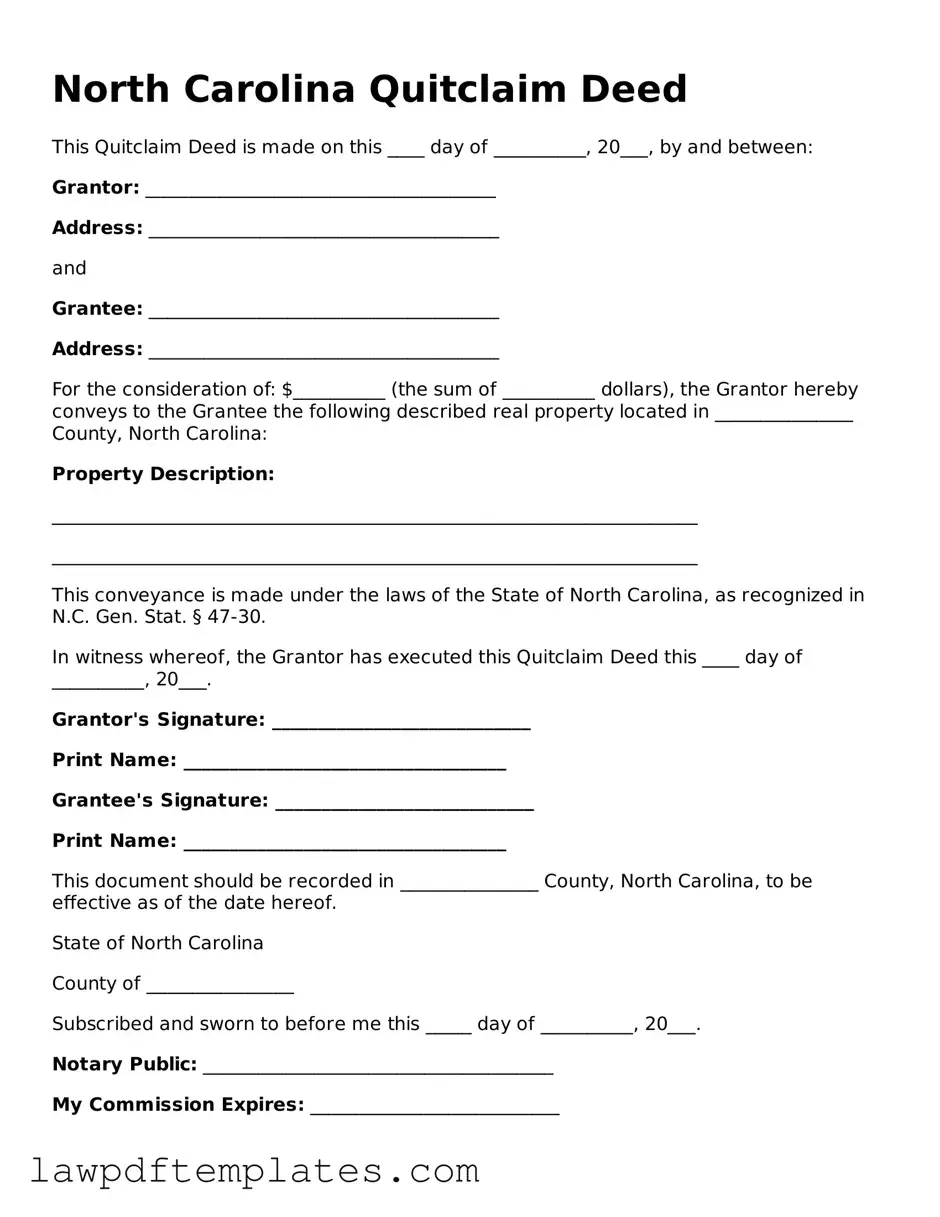
North Carolina Quitclaim Deed
This Quitclaim Deed is made on this ____ day of __________, 20___, by and between:
Grantor: ______________________________________
Address: ______________________________________
and
Grantee: ______________________________________
Address: ______________________________________
For the consideration of: $__________ (the sum of __________ dollars), the Grantor hereby conveys to the Grantee the following described real property located in _______________ County, North Carolina:
Property Description:
______________________________________________________________________
______________________________________________________________________
This conveyance is made under the laws of the State of North Carolina, as recognized in N.C. Gen. Stat. § 47-30.
In witness whereof, the Grantor has executed this Quitclaim Deed this ____ day of __________, 20___.
Grantor's Signature: ____________________________
Print Name: ___________________________________
Grantee's Signature: ____________________________
Print Name: ___________________________________
This document should be recorded in _______________ County, North Carolina, to be effective as of the date hereof.
State of North Carolina
County of ________________
Subscribed and sworn to before me this _____ day of __________, 20___.
Notary Public: ______________________________________
My Commission Expires: ___________________________
Common mistakes
Filling out a North Carolina Quitclaim Deed form can be straightforward, but many people make common mistakes that can lead to complications. One frequent error is not including the correct names of the grantor and grantee. It's essential to ensure that the names are spelled correctly and match the names on the property title. Any discrepancies can cause delays or issues with the transfer.
Another mistake involves failing to provide a complete legal description of the property. The legal description must be precise and detailed, outlining the boundaries and specific location of the property. Omitting this information can render the deed invalid. Always double-check that the description matches what is on the original title.
Many individuals overlook the requirement for signatures. Both the grantor and the grantee must sign the deed for it to be valid. In some cases, people forget to have the grantor sign in front of a notary public. Without notarization, the deed may not be recognized by the county register of deeds.
Additionally, some people fail to include the date of the transfer. This date is crucial for establishing when the property ownership changes hands. Leaving this field blank can lead to confusion regarding the timing of the transfer.
Another common error is neglecting to check local recording requirements. Each county in North Carolina may have specific rules regarding the filing of Quitclaim Deeds. Not adhering to these requirements can result in rejection of the deed by the county office.
People sometimes forget to include the consideration amount, which is the value exchanged for the property. Even if the transfer is a gift, this amount should still be stated. This detail is important for tax purposes and helps to clarify the nature of the transaction.
Some individuals may not realize that a Quitclaim Deed does not guarantee clear title. It simply transfers whatever interest the grantor has in the property. Failing to understand this can lead to misunderstandings about ownership rights.
Lastly, many people do not keep copies of the completed deed. It's vital to retain a copy for personal records. This can help resolve any future disputes or questions regarding the property transfer.
By being aware of these common mistakes, you can ensure a smoother process when filling out the North Carolina Quitclaim Deed form. Taking the time to review each section carefully can save you from potential headaches down the line.
Discover More Quitclaim Deed Templates for Specific States
Where Can I Get a Quitclaim Deed Form - A Quitclaim Deed serves as a record for future reference regarding property ownership.
Utilizing the FedEx Bill of Lading form is essential for efficient freight transport, and for those looking for customizable templates, Fast PDF Templates offers a valuable resource. This document acts not only as a receipt for the goods being shipped but also clearly outlines the terms under which the carrier agrees to transport the items. Familiarity with this form helps ensure that all shipments are managed effectively, with clear expectations set among all involved parties.
Filled Out Quit Claim Deed Michigan - It is essential to keep a copy of the Quitclaim Deed for records.